Measuring & Layout · Single tool · DIY · Pro
Laser Distance Meter: The Tape Measure Upgrade Worth Owning
8 min read
As an Amazon Associate I earn from qualifying purchases. Links to Amazon on this page are affiliate links. How that works.
Quick answer
A laser distance meter is a small handheld tool that shoots a laser at a wall and shows the distance on a screen. If you measure rooms, walls or long spans more than a few times a year, it is faster and easier than a tape, and you can do it alone. Skip it only if you measure small things up close.
What is a laser distance meter?
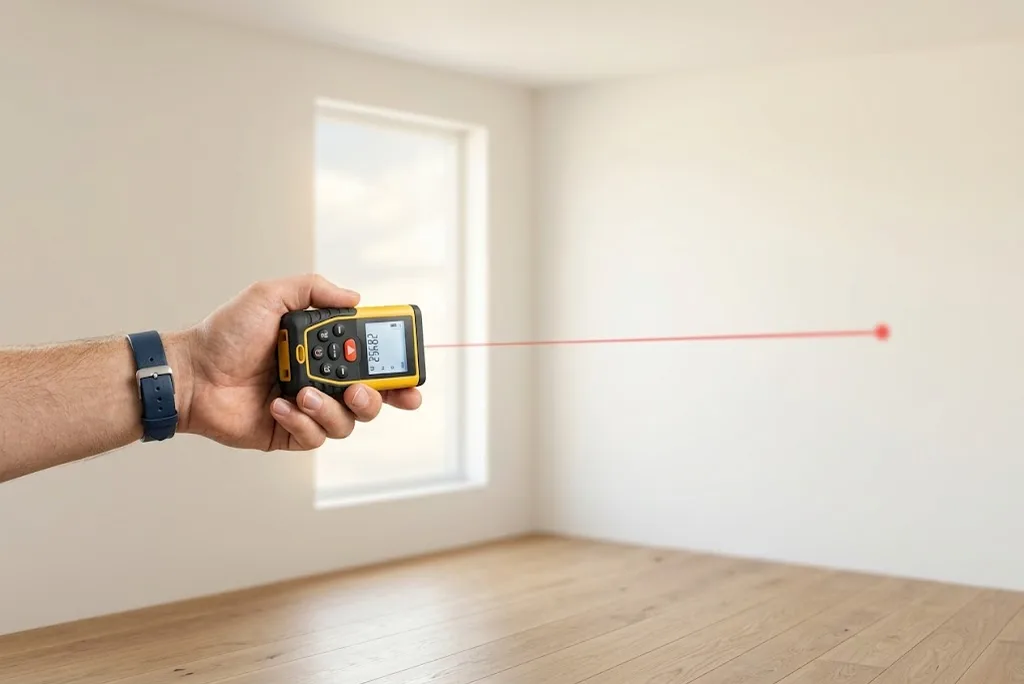
A laser distance meter is a small handheld tool, usually about the size of a TV remote, that tells you how far away something is. You hold one end against a wall or a floor, point the laser at the opposite wall, press a button, and the distance appears on a screen. That is the whole idea.
Inside, the device sends out a beam of light, times how long it takes to bounce back, and turns that time into a distance. You do not need to understand the physics. What matters is that it works from where you are standing, with no one holding the other end of a tape.
You will see them called laser measures, laser tape measures or "lasers" on a jobsite. The name on the box matters less than the features: range, accuracy, and what the device can calculate for you.
I'm a licensed architect, and I use one on nearly every project. When I walk an existing house for a remodel, the laser is the first thing out of my bag.
Why you'll want it
Here is the honest pitch. A laser meter does not do anything a tape cannot do. It does the same job faster, with fewer mistakes, and without a second person. After a month of using one, most people stop reaching for the tape on anything bigger than a closet.
Measure alone. Anyone who has tried to hold a tape against a far wall while holding the case with the other hand knows the frustration. The tape sags, the hook slips, and you end up writing down a number you do not trust. With a laser, you stand in one corner and press a button.
Measure fast. Walking a whole house takes minutes. You can capture every room, hallway and closet without wrestling a tape around furniture.
Let it do the math. Most meters add and subtract measurements and calculate area and volume. Painting a room? Measure the walls and read off the area. Buying flooring? Measure length and width, and the meter shows square footage. Ordering concrete or gravel? Volume mode is made for that.
Reach places you cannot. Ceiling height without a ladder. The distance across a stairwell. The width of a deck from one side. A laser makes tricky measurements simple and safer.
Fewer mistakes. A number on a screen is easier to read than a tick mark on a tape, and many models store recent readings so you can scroll back instead of trusting your memory.
Where you will use it
- Planning a remodel: room sizes, wall lengths and ceiling heights in one walkthrough.
- Buying furniture or appliances: check that the sofa, fridge or bed fits before it arrives.
- Painting and flooring: accurate quantities mean fewer trips back to the store.
- Decks and fences: long runs measured in seconds, from end to end.
- Real estate walkthroughs: quick checks on an apartment or house you may rent or buy.
- Craft and workshop layouts: the length of a wall for shelving, or the span for a long shelf.
Laser or tape: when each one wins
I still carry both. Here is how I decide in the moment.
- Use the laser for anything longer than your arm span: room dimensions, hallway lengths, ceiling heights, the width of a yard, the distance between two posts.
- Use the tape for small parts, lumber, anything curved, and for checking a cut. A tape also lets you hook onto an edge and pull to a line, which a laser cannot do.
- Use both when it matters. I often measure a room with the laser, then verify one wall with a tape on the first day of a project. If the two agree, I trust the rest of the numbers.
One more thing: a laser tells you the distance to the first solid surface the beam hits. If a chair, a lamp or a person is in the path, you will measure that object instead of the wall. Clear the line, or aim a little higher.
Who it's for
- Homeowners planning paint, flooring, furniture or a remodel
- Renters and buyers checking whether a room fits what they own
- Contractors and pros who measure alone and want quick numbers
- Makers laying out long runs of shelving or fencing
Who should skip it
- People who only measure small items. A tape measure is cheaper and faster up close.
- Anyone who needs to measure around curves. A laser goes straight; a flexible tape follows curves.
- Those who will not use it often. If you measure a handful of times a year, a basic tape does the job.
How to use it
Every laser meter is a little different, so check the manual for yours. These steps work for most of them.
- Put in fresh batteries. Low batteries cause odd readings and a dim laser. Use the type the manual specifies.
- Pick your starting point. Most meters measure from the back edge of the tool by default. Some let you switch to the front edge or a tripod thread. Pick the one that fits the job: for a corner, set the back of the meter right in the corner.
- Press the tool flat against your starting surface. A wall, a floor or the end of a board all work. Keep it steady and level, since tilting changes the result.
- Aim at a solid, plain surface. Choose a flat wall or a board. Avoid glass, mirrors, shiny metal and very dark or very bright surfaces, which can confuse the laser.
- Press the measure button. On many models the first press turns on the laser, and the second takes the reading. Wait for the beep or the number on the screen.
- Write it down or save it. Record the number right away, or use the memory or app feature. Do not trust yourself to remember five rooms.
- Use the modes. For area, switch to area mode and measure length, then width. For volume, add height. For a total across several walls, use add mode and keep going.
- Double-check the first measurement. The first time you use any new meter, compare it to a tape on a wall you know. It builds confidence and catches setup mistakes like the wrong reference edge.
Tips from the field
- Use a target plate outdoors. A bit of white cardboard held against the far point makes the laser dot easy to see.
- Measure at the same height. Hold the tool at the same height each time so floors and walls line up.
- Account for baseboards. If you need the clear space between walls, measure at a height above the trim.
- Steady your hand. Rest your elbow on your body, or set the tool on a stable surface, to keep the dot still.
- Know your reference edge. If your numbers are all off by the same small amount, you probably have the wrong measuring edge selected.
Common mistakes
- Measuring to a doorway or window. The beam may pass through the opening or bounce off the glass. Measure to the solid wall beside it.
- Forgetting the meter's own length. If you place the tool against a wall using the wrong reference edge, every number will be off by the length of the case.
- Reading the wrong mode. It is easy to leave the tool in area or volume mode, then wonder why a simple length looks odd. Check the icon on the screen.
- Trusting one reading. Take a second reading on any number that will drive a purchase. It takes two seconds and saves a lot of returns.
- Leaving it in a hot car. Heat and cold are hard on batteries and screens. Keep it in its case and bring it inside.
What to look for when buying
The market is full of options. Most people only need to check a short list of things.
Range. Most homeowners will never need to measure far, but a bit of extra range gives you headroom outdoors, where the laser is harder to see. Pros who measure large buildings or long lots should look at longer-range models.
Accuracy. For home projects, an accuracy of about 1/16 inch over normal distances is more than enough. Do not pay extra for tighter numbers than your project needs.
Modes. At minimum, look for continuous measuring, add and subtract, and area and volume. The indirect or Pythagorean mode, which calculates a distance you cannot reach directly, is a nice extra for ceilings and tall walls.
Screen. A backlit display is worth having. Many of the rooms and crawlspaces you will measure are dark.
Build quality. You will drop it eventually. A rubberized body, a case and a decent warranty add real value. Look at how the buttons feel; a stiff or mushy button gets annoying fast.
Battery type. AAA batteries are common and easy to swap. Built-in rechargeable batteries are convenient but can be a problem if they fail.
App and Bluetooth. Nice if you want to export measurements to a phone, draw quick floor plans or share dimensions with a client. You can skip this if you only need the screen readout.
Tier. Entry-level meters do the basics well. Mid-range models add the better screen, more modes and the app. Pro models add longer range, tougher bodies and extras like a built-in digital level. A mid-range model fits most homeowners and many pros.
The table below pulls the main points into one place so you can compare models side by side.
Key specs to look for
| Spec | What to look for |
|---|---|
| Range | Choose a range longer than your biggest typical room or span. Most homeowners are fine with a modest range; contractors and outdoor users should go longer. |
| Accuracy | A stated accuracy of about 1/16 inch or better over typical distances is plenty for home projects. |
| Measuring modes | Area, volume and add/subtract functions save math. Indirect (Pythagorean) mode helps when you cannot reach a point. |
| Display | A backlit screen you can read in a dim room. Large digits help. |
| Reference point | A switchable front/back measuring edge makes it easy to measure from a corner or the end of the tool. |
| Outdoor use | Bright sunlight washes out a laser dot. A model with a viewfinder or a target plate helps outside. |
| Power and build | Common batteries (AAA), a protective case and some drop protection. |
| App and Bluetooth | Optional. Useful if you want to save measurements or export sketches. |
Where to get it
For this guide I'm featuring the Bosch GLM 50 C, a compact laser measure that includes Bluetooth and an inclinometer for digital leveling, according to the product listing. It sits in the mid-range tier and covers what most homeowners and many pros need. I chose it because it handles the basics well, adds the helpful extras without being fussy, and comes from a company that makes serious measuring tools.
Bosch GLM 50 C Laser Distance Measure
- Measures a room in about a second, even when you are alone
- Adds up areas and volumes for you, handy for paint, flooring and concrete
- Connects to a phone app so measurements can be saved instead of scribbled
How we scored it
Usefulness 9/10 · Value 8/10 · Durability 8/10. This is our own opinion, based on reading specs and using similar tools. It is not an Amazon or customer rating.
Prices change often, so click through to check today's price and read the current reviews on Amazon. If another model fits your budget or range needs better, use the specs above to compare. Whatever you pick, test it against a tape the day it arrives so you know it is set up right.
If you are building out a basic kit, see the new homeowner toolkit or the weekend DIYer kit for what to buy next.
Frequently asked questions
Is a laser distance meter more accurate than a tape measure?
For long distances, usually yes, because a tape can sag, bend or be read wrongly, and a laser gives one clean number. For short distances up close, a good tape is just as accurate. The bigger win is speed and being able to measure alone.
Can I use a laser distance meter outside?
Yes, but bright sunlight makes the red dot hard to see, and that limits how far you can measure. Use a target plate, aim at a shaded surface, or choose a model with a viewfinder for outdoor work.
Will it measure across a window or glass?
Not reliably. Glass, mirrors and shiny surfaces can bounce or scatter the laser. Measure to a solid wall, or hold a piece of cardboard against the surface as a target.
Is the laser safe for my eyes?
Consumer laser meters use a low-power visible laser, and the instructions say never to point it at anyone's eyes. Treat it like any laser pointer: do not shine it at people, pets or reflective surfaces that bounce it back.
Do I still need a tape measure?
Yes. A laser is great for rooms and long spans. A tape is better for small parts, curves, lumber and checking a cut. Most people end up using both.
How often should I check that it is still accurate?
Test it now and then against a known length, such as a good tape on a wall. If it is off, check the battery and the measuring reference setting first, since those cause most surprises.
Related tools
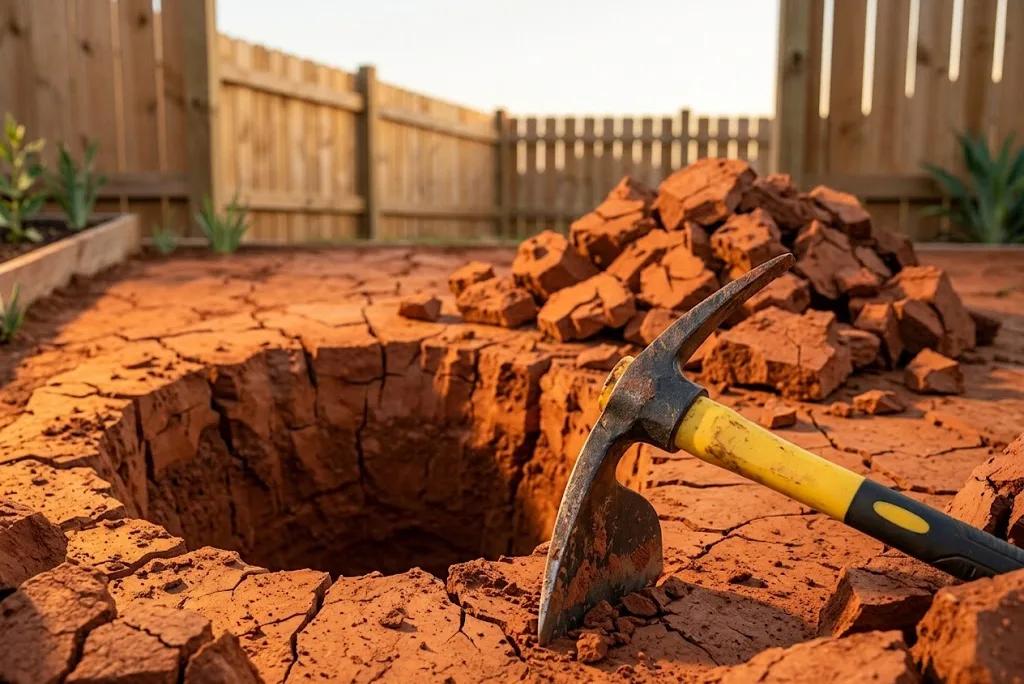 Outdoor & GardenPick Mattock: The Digging Tool for Ground a Shovel Cannot BreakA pick mattock is a heavy digging tool with a pick on one side and a flat chopping blade (an adze) on the other.
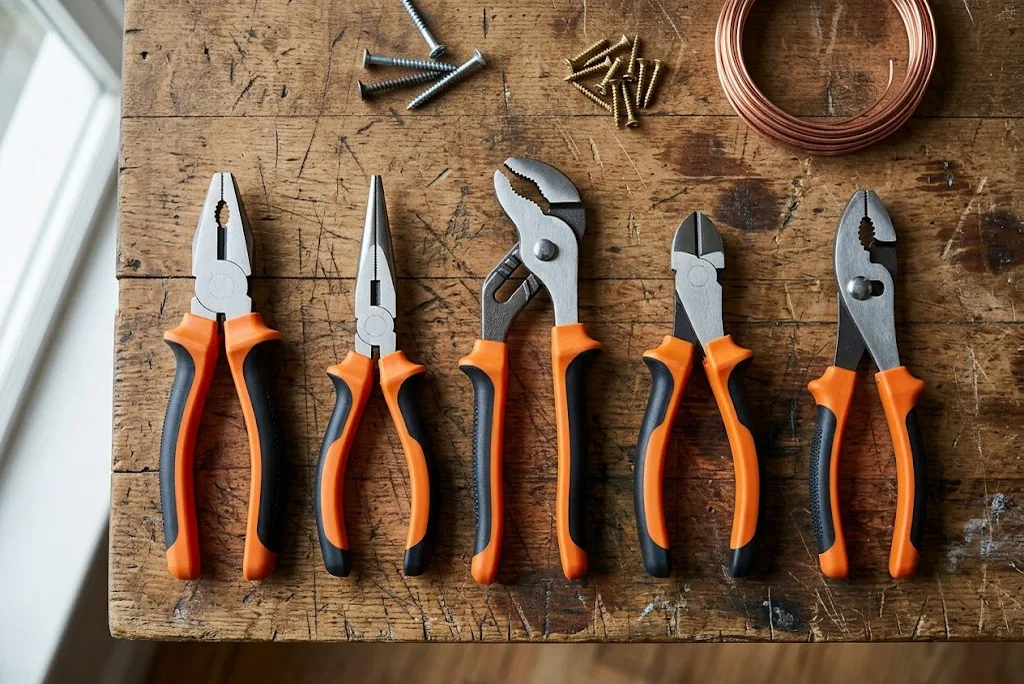 Hand Tools · Roundup5 Pliers Every Homeowner Should Own (and What Each One Does)Most homeowners need five pliers: lineman's pliers for cutting and gripping, long-nose pliers for tight spots, tongue-and-groove pliers for pipes and big nuts, diagonal cutters for wire, and slip-joint pliers for general grabbing.